
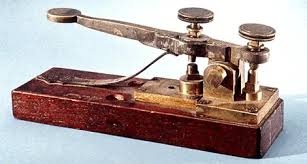
Did you know that the invention of the telegraph set the foundation for the global communication networks we rely on today? Imagine a world where sending a message from New York to London took twelve days—or even seventy-three days to reach Sydney! Before the telegraph, global communication was painfully slow, depending on ships and horseback. But in 1838, Samuel Morse’s telegraph changed everything, speeding up communication in ways previously unimaginable and laying the groundwork for the digital age.
The Motivating Factors Behind the Telegraph
Samuel Morse, like many inventors, was driven by personal and societal needs. The tragic death of his wife, which Morse learned of days too late via snail mail, pushed him to find a faster way to communicate over long distances. That personal loss became the spark for one of the most transformative inventions of the 19th century. He envisioned a world where information could flow freely, overcoming the barriers of time and distance.
Technological Foundations
The telegraph didn’t emerge in isolation—it was built on the back of earlier inventions. Morse’s work depended on the discovery of electromagnetism, particularly the ability to control an electrical current to produce signals over a wire. Early electrical devices like the relay switch played a key role. Morse saw the potential where others did not: instead of focusing on transmitting voices or pictures, he broke communication down into a system of simple beeps—an early form of digital coding. While the signals themselves were analog, their translation into Morse code, a standardized system of dots and dashes, could be seen as the precursor to modern digital systems.
Political and Economic Challenges
In bringing the telegraph to life, Morse faced political obstacles. Convincing a skeptical government and public of the telegraph’s importance was no easy task. But political tensions, particularly the need for faster communication during wars, eventually tipped the scales. The U.S. government realized that a rapid communication network was critical for national security and governance. Additionally, the growing economy demanded faster communication to support trade and industry. Morse’s telegraph answered these needs, allowing business deals to be sealed in hours rather than weeks.
Visionary Insights
Morse’s genius lay not just in the technology, but in his vision of what it could become. Where others saw only the potential for short-range communication, Morse foresaw a global network. By 1858, the first transatlantic telegraph cable was installed, allowing for communication between continents. A few years later, in 1861, the telegraph reached the western coast of the United States, with stations dotting the landscape every 30 miles. Morse was a visionary, recognizing that the world was becoming smaller—and that communication was key to this transformation.
The Impact on Society
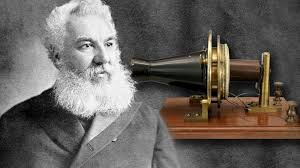
The effects of the telegraph were profound. Governments, businesses, and individuals were suddenly connected in ways that seemed almost magical. News that once took weeks or months to spread could now travel in hours. World leaders could react to events in near real-time, businesses could operate more efficiently, and distant family members could stay in touch. The telegraph also paved the way for subsequent innovations, from the telephone to the internet, accelerating the pace of technological change.
From Analog to Digital
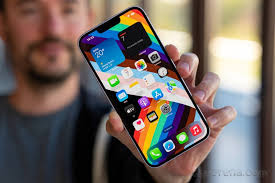
Interestingly, the telegraph occupies a unique space between the analog and digital worlds. The signal it transmitted was analog, varying with time and distance. However, Morse code itself was digital in nature—a predefined set of characters represented by combinations of short and long signals. This limited alphabet, much like the binary code of today, allowed for clear, efficient communication. Later technologies, such as the telephone, continued this analog trend until the arrival of cell phones and 2G networks, where the shift from analog to fully digital communication truly took hold.
Conclusion
The telegraph was not just a product of its time; it was the beginning of the digital age. By breaking down information into manageable, transmittable signals, it set the stage for the world of ones and zeros that now governs our digital landscape. Though we no longer rely on dots and dashes, the telegraph’s influence remains embedded in the very fabric of how we communicate today. The digital revolution truly began with the click of a telegraph key.